10 Best LED Mirrors for Modern Bathroom Designs
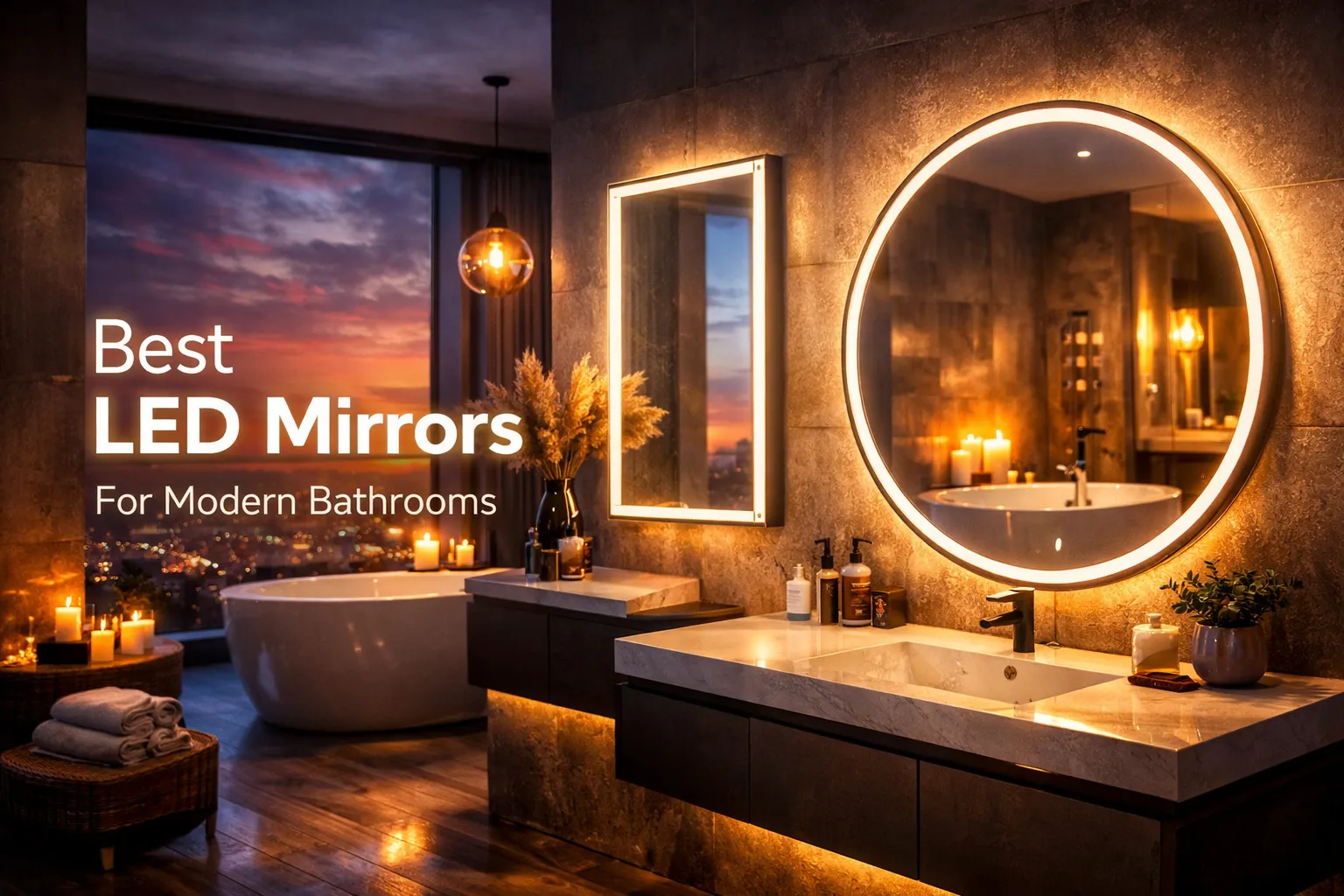
An led mirror can replace multiple light sources, cut energy waste, and simplify your morning routine. A lighted or backlit mirror delivers even, frontal illumination that reduces harsh shadows and makes grooming tasks more accurate. Slightly warmer, high-CRI light helps shaving, while neutral, high-CRI lighting shows true skin tones for makeup. Integrated lighting frees wall space and works well with vanity sconces when you want layered light for depth and mood.
Integrated LED mirrors also cut energy use and maintenance costs because they draw far less power than incandescent bulbs, and many LED modules are rated for about 50,000 hours, which means far fewer replacements. Higher-end backlit and anti-fog models often include warranties plus memory and dimming functions, so a dimmable led mirror keeps color temperature and output consistent over time. The list that follows highlights top-rated illuminated bathroom mirrors with CRI, dimmability, and IP ratings so you can compare reliability, style, and value.
Key takeaways
- Even task lighting provides frontal, shadow-free light that makes makeup, grooming, and shaving more accurate.
- Prioritize CRI and aim for 90+ so skin tones and colors read true under the mirror’s light.
- Choose color temperature to match the task: around 5000 K for precise work, or a warmer setting for a softer look; dimming adds flexibility.
- Check IP ratings and anti-fog features before installation to keep the mirror safe and reliable in humid areas.
- Measure your vanity and compare models by CRI, IP, and dimming; use a 30-day return policy to test fit and function at home.
What an LED mirror does for your bathroom
The following section covers the specific features to prioritize when choosing the right led mirror for your space.
How to read LED mirror specs: CRI, color temp, brightness and controls
Start with color accuracy: aim for a CRI of 90 or higher to ensure true-to-life skin tones and accurate color matching for makeup and grooming. For task-focused light target around 5000 K, while warmer ranges between 3000 K and 4100 K are more flattering for general bathroom use. A dimmable led mirror with multiple color modes lets you switch between bright, cool task light and softer, warm ambient light without adding fixtures. If your bathroom gets humid, choose an anti-fog led mirror so color and brightness stay usable after a shower.
Understand lumens versus lux: lumens measure total light output while lux measures the light falling on your face. Aim for about 500–1000 lux at face height for grooming and makeup, and 200–300 lux for general lighting. If a product lists lux at a given distance use that figure; otherwise choose higher lumens for larger mirrors or dim rooms. Controls matter too, and common options include touch dimmers, memory presets, remotes, and smart-home integration that return the mirror to your preferred color and brightness. For close-up tasks, a dedicated Vanity Makeup Mirror with Lights can supplement a main mirror.
Water protection, anti‑fog and electrical safety
Bathroom zones determine how close a fixture sits to water and what protection it needs. Zone 0 is inside the bath or shower, Zone 1 covers the area above the bath or shower up to 2.25 m, and Zone 2 reaches 0.6 m beyond that, so avoid placing a powered led mirror in Zone 0. If a mirror will be exposed to spray or drip it needs the correct IP rating and safe wiring to reduce risk. For a clear summary of bathroom zones and the corresponding IP requirements, review the bathroom zones and IP rating guide.
Match IP ratings to the exposure risk. Aim for at least IP65 for shower-adjacent fittings and IP44 or higher for sink and vanity areas, and keep non-IP-rated mirrors outside splash zones and at least 0.6 m from direct spray. Follow basic placement rules to avoid safety issues:
- Do not install powered or hardwired mirrors inside Zone 0; use waterproof fixtures only.
- Place mirrors with IP44+ above sinks and at a safe distance from shower spray.
- Reserve IP65 or higher for any mirror mounted near the shower or bathtub edge.
Hardwiring in Zone 1 requires a qualified electrician to ensure correct cabling, RCD protection, and sealed connections. Anti-fog heating pads or demister films use low power, typically a few dozen watts, to warm the mirror surface and prevent condensation, and they usually run on an on/off switch, a timer, or with the light. Hydrophobic coatings exist but wear faster and are less reliable than a heated demister, so pairing a demister with ventilation offers more durable performance. To understand how integrated heating and LED placement reduce fogging in practical installations, see this article on how LED bathroom mirrors help reduce fog.
Choosing style, size and installation type
Finish and lighting placement affect both performance and the room’s character. A backlit vanity mirror hides LEDs behind the glass flange to create soft, even halo light that reduces glare, while ring-style mirrors can act as a focal point and sometimes reflect in eyeglasses. Front-lit designs place LEDs at the face plane for stronger task lighting and crisper shadows, so pick ambient backlighting for softer atmosphere and front-lit models for precise makeup or shaving light.
Size matters more than style for function. Aim for a mirror width about 70 to 90 percent of the vanity so single vanities appear balanced, and use two mirrors or one wide mirror for double vanities. Position the mirror center roughly 58 to 62 inches from the floor for average users, leaving the bottom edge 4 to 6 inches above the backsplash to avoid splash contact. When sizing a led mirror, account for frames, medicine cabinets, and tile patterns before ordering. If you need a floor-to-ceiling option or guidance on styling and installation, our Full Length Mirror With LED Lights guide covers choices and mounting methods.
Mounting type affects both appearance and safety: wall clips and French cleats are fast for retrofits, while recessed installations create a flush, built-in look. Keep electrical components and switches away from direct spray and follow IP recommendations for your bathroom zones. Hire a licensed electrician for hardwiring, transformer placement inside wet zones, or when replacing a mains fixture, and if you install the mirror yourself gather the right tools and follow safe wiring practices.
- Stud finder, level, tape measure and pencil
- Drill, appropriate bits and wall anchors for tile or drywall
- Wire tester, insulated screwdrivers and safety glasses
Decide between plug-in mirrors for renter-friendly installs and hardwired options for a clean look, and weigh 12-volt low-voltage systems against mains-powered units; low-voltage is safer near sinks but requires a transformer and often professional wiring. If you’re uncomfortable testing live wires or mounting in a zone near water, schedule an electrician to avoid costly mistakes. For installation-friendly vanity options that add magnification and adjustable brightness, consider a Lighted Vanity Mirror with 10X Magnification.
10 best LED mirrors (plus 2 honorable mentions): picks across budgets
The list below offers compact, practical picks so you can compare features quickly; each selection includes a short reason to buy and key specs such as price band, dimmability, anti-fog, and IP rating. The roundup emphasizes real-world value and lighting performance, with one led mirror recommended in each budget tier.
Budget picks: 4 value-focused backlit mirrors (what to expect) These options deliver the core features most buyers want, including dimming, multiple color modes, and anti-fog on some models, without premium finishes or long warranties.
- LOAAO 24×32″. Best value for basic performance with three color modes and both front and back lighting. Spec: Price $80–$180; dimmable: yes; anti-fog: yes; IP rating: not specified.
- Dimo DBS-51 (aluminum framed). A solid framed option that installs easily and looks clean. Spec: Price $70–$160; dimmable: likely; anti-fog: not clearly stated; IP rating: not specified.
- Keonjinn anti-fog LED. Strong overall value with reliable dimming, memory function, and a dedicated anti-fog switch. Spec: Price $150–$350; dimmable: yes; anti-fog: yes; IP rating: not specified.
- Amorho / Hivone variants. Good if you want dual front and back lights and shatter-resistant glass on a budget. Spec: Price $90–$220; dimmable: yes; anti-fog: often included; IP rating: sometimes IP44 depending on model.
Mid-range and premium picks plus two honorable mentions These models raise CRI, build quality, and warranty length for buyers who want longer-term performance and cleaner finishes.
- Hauschen Home wall mounted. Pro-grade color rendering for makeup and detailed tasks. Compare: CRI 95+; adjustable color temps; IP rating varies; anti-fog: yes; warranty: ~3–5 years; price band: $250–$600.
- Kohler Verdera. Higher-end option with smart features and polished finishes. Compare: manufacturer-claimed high CRI; 3000–6000 K; IP rating varies by model; anti-fog: yes; warranty: 3–5 years; price band: $400–$900.
- Thermogroup Ablaze. Balanced mid-range lighting with durable electronics. Compare: CRI typically 90+; adjustable color temps; IP44 options; anti-fog available; warranty: 2–5 years; price band: $200–$500.
- Otti Newport. Flexible color temps for warm-to-cool task lighting. Compare: CRI ~90; 3000–6000 K; IP rating varies; anti-fog optional; warranty: 2–4 years; price band: $220–$550.
- Eglo Pandella. Design-forward mirror with quality finishes for modern bathrooms. Compare: CRI 90+; adjustable color temps; IP details model-dependent; anti-fog sometimes included; warranty: 2–3 years; price band: $180–$450.
- Simplehuman Sensor Mirror. Compact sensor-activated design with accurate lighting and durable finish. Compare: CRI ~90+; adjustable color temps; anti-fog: optional; warranty: 1–3 years; price band: $250–$700.
- Honorable mention: smart-feature model. Look for integrated Bluetooth, touch controls, and app memory if convenience matters. Compare: CRI varies; adjustable color temps; IP rating varies; anti-fog sometimes included; warranty: 1–5 years; price band: $300–$1,000.
- Honorable mention: luxury finish model. Choose brushed brass or stone-edge options for premium aesthetics and longer warranties. Compare: CRI typically high; adjustable color temps; IP rating varies by model; anti-fog optional; warranty: 3–7 years; price band: $500–$1,500.
Quick buying checklist, FAQ and where to buy
Keep this checklist handy at checkout so you don’t miss key specs. Use the list below as a quick reference or save it to your notes; these are the items installers and experienced buyers check first to avoid returns and extra work.
- Confirm CRI (look for 90+ for accurate color).
- Pick color temperature modes: single, dual, or adjustable.
- Verify dimming type: touch, remote, or triac (wall) dimming.
- Check IP rating vs placement: IP44+ for splash zones.
- Confirm anti-fog presence and whether it’s switch- or motion-activated.
- Measure mirror vs vanity: allow 2–4 inches clearance on sides.
- Decide plug-in vs hardwired based on wiring access and aesthetics.
- Review warranty length and what it covers (LEDs, driver, glass).
- Check return policy window and restocking fees.
- Confirm lead time and shipping: expedited vs standard, and any installation delays.
Warranties and returns vary, but most quality mirrors include at least a one-year warranty on electronics and longer LED life ratings, so check what is covered before you buy. Leading Choice Oasis curates vetted models and provides secure checkout and fast worldwide shipping, backed by a 30-day returns policy that lets you test fit and function at home.
Choose the right LED mirror for your bathroom
An LED mirror simplifies daily routines by placing task lighting where you need it most, so grooming and makeup become faster and more accurate. Good lighting reveals true skin tones and reduces shadows, which makes results more reliable.
Focus on three core specs before you buy: color accuracy, color temperature, and controls. Aim for a CRI of 90 or higher, pick a color temperature that fits your vanity, and choose dimmable or preset controls for flexibility. Also verify IP rating, anti-fog features, and certified electrical safety so the mirror withstands humid conditions. For a deeper look at bathroom color temperature and how it affects appearance, this guide to bathroom color temperature is a helpful reference.
To proceed, measure your vanity width, note preferred CRI and color temperature, and compare at least three led mirror models filtered by CRI 90+, IP or anti-fog ratings, and dimming options. Save your top picks and contact a licensed electrician if the installation requires hardwiring or work inside bathroom zones. For general information about LED mirror safety considerations and safe installation practices, see are LED mirrors safe.









Leave a comment