32-Inch Modern Desk with Fabric Drawers for Small Spaces
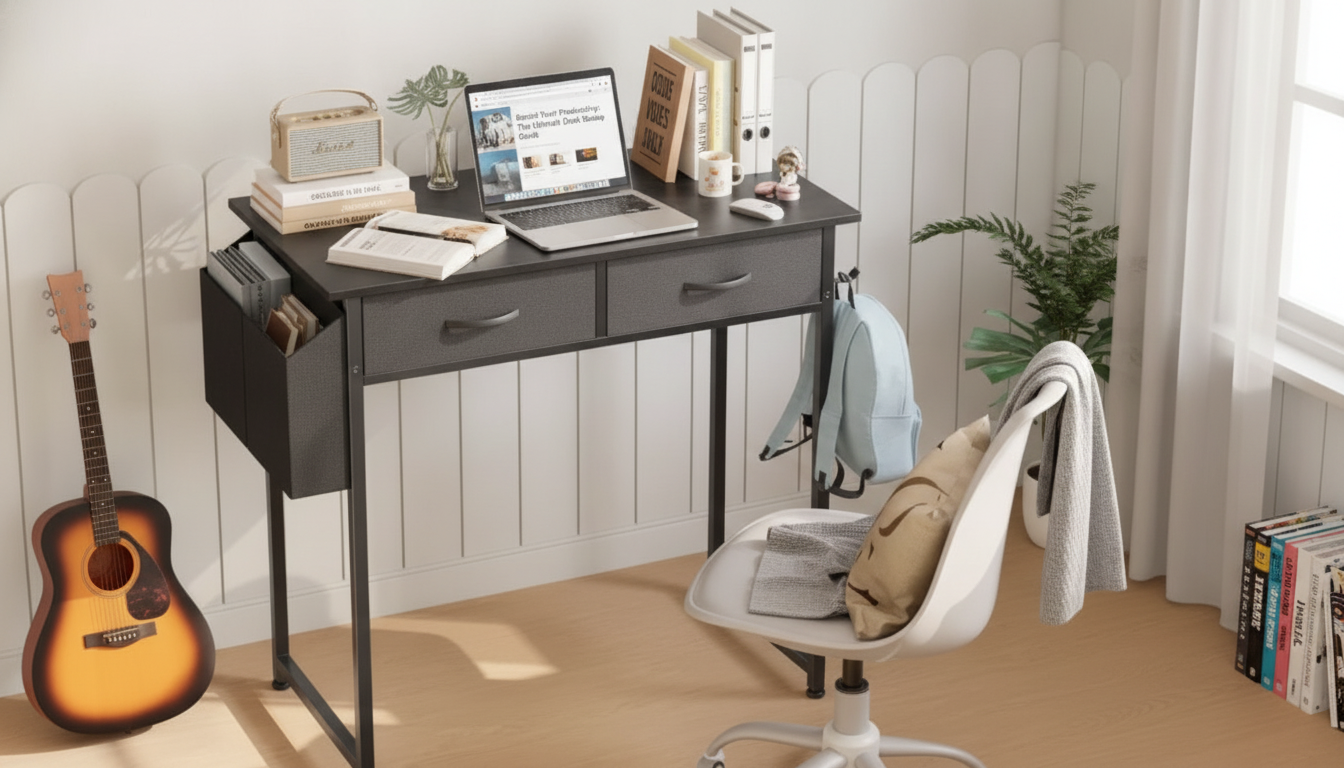
32 Inch Modern Office Desk with Fabric Storage Drawers and Metal Frame
A compact workstation that fits small rooms, apartments, and multipurpose spaces can still look polished and keep clutter under control. The 32 Inch Modern Office Desk with Fabric Storage Drawers and Metal Frame pairs a streamlined top with fabric storage drawers and a metal frame, aiming for everyday practicality—writing, laptop work, studying, or even a tidy entryway drop zone—without taking over the room.
Quick snapshot: what it is and who it suits
- Designed for small-footprint work zones: bedrooms, dorms, studio apartments, and kids’ homework corners.
- Fabric drawers help corral chargers, notebooks, stationery, and small accessories that otherwise end up on the surface.
- Metal frame focuses on stability and a clean, modern look that pairs well with minimalist décor.
- Good match for laptop setups, light writing, and occasional monitor use (space planning matters for larger screens).
If you’re building a “just-right” workstation that disappears visually when you’re off the clock, a 32-inch desk can be the sweet spot—especially when storage is built in instead of added later with bins or mini file cabinets.
Dimensions and room planning for a 32-inch desk
A 32-inch width typically works best for a laptop-centered setup or a compact keyboard/mouse arrangement. Before buying, it helps to map the desk’s footprint along with how you’ll move around it—because comfort is about clearances as much as it is about the tabletop.
- Plan for chair clearance and legroom: measure the space behind and under the desk before buying.
- Consider nearby outlets and cable routing so the drawers remain easy to access and the surface stays uncluttered.
- If using an external monitor, prioritize a monitor arm or a narrow stand to preserve usable desktop space.
Space planning checklist (at-a-glance)
| Planning item | What to measure/confirm | Why it matters |
|---|---|---|
| Desk placement width | At least desk width plus a little side clearance | Avoids a cramped look and makes cleaning easier |
| Depth clearance for chair | Room to slide chair back comfortably | Improves comfort and reduces bumping into walls/bed |
| Outlet and cord path | Distance to power and safe cable route | Keeps cords tidy and prevents drawer interference |
| Drawer access | Space at the front/sides where drawers pull out | Ensures storage stays convenient, not blocked |
Storage drawers: what they’re best for
Fabric storage drawers shine when you use them for the kind of small, lightweight items that cause daily mess. Instead of letting cables, sticky notes, and adapters drift across the top, you can “assign a home” and reset the surface in seconds.
- Fabric drawers are ideal for lightweight items: pens, sticky notes, USB hubs, headphones, adapters, and small notebooks.
- Use simple dividers or pouches inside drawers to prevent small items from migrating and creating clutter.
- Assign drawers by task (school/work/cables) to speed up daily routines and keep the top clear.
- For heavier items (textbooks, printers), consider placing them on a separate shelf unit nearby to protect drawer shape.
A helpful rule: if the item is dense enough to thump when it hits the drawer bottom, it’s usually better stored elsewhere—especially if you want the drawers to keep their shape over time.
Metal frame and everyday stability
A metal frame is often chosen for the “set it and forget it” feel—less flex, a crisp silhouette, and a look that works with both warm wood tones and black-and-white décor. For the steadiest day-to-day experience, setup details matter.
- Metal framing generally supports a more rigid feel than all-particleboard builds, especially on carpet or uneven floors.
- Check and re-tighten hardware after initial assembly and again after a week of use (common for new furniture settling).
- If the floor is uneven, use furniture pads or adjustable feet (if included) to reduce wobble.
- Keep weight centered when possible; avoid placing the heaviest items on one far corner.
For carpeted rooms, a firmer chair mat can also reduce the “push-pull” movement that makes compact desks feel less stable—even when the frame is solid.
Comfort and ergonomics for compact setups
A smaller desk can still support a comfortable posture when the essentials are placed intentionally. Start with your chair height and screen placement, then fine-tune with compact accessories rather than crowding the surface with oversized gear.
For additional workstation guidance, the OSHA Computer Workstations eTool and Cornell University’s office ergonomics resources offer practical setup references that apply even to compact desks.
Assembly, care, and keeping it looking new
Styling ideas for a modern, tidy workspace
If your room lacks natural greenery, an Artificial Tall Tree with Pot can add height and softness near the desk without adding maintenance or watering concerns.
Is this desk a good value for the space it saves?
FAQ
Will a 32-inch desk fit a monitor and a laptop?
It can, especially with a narrow monitor stand or a monitor arm to reclaim surface space. Measure your monitor base width and make sure you still have room in front for a keyboard and mouse without feeling cramped.
What should go in fabric storage drawers to avoid sagging?
Use them for lightweight supplies like pens, cables, chargers, adapters, and small notebooks. Avoid heavy stacks of books or dense items; small pouches or bins inside the drawer help keep contents organized and evenly distributed.
How can wobble be reduced after assembly?
Tighten screws evenly (don’t fully tighten one side before the others), then re-check after a few days of use as hardware settles. If the floor is uneven, add furniture pads or levelers to stabilize the desk and reduce rocking.









Leave a comment