Multilevel Cat Tree: 2 Condos, Perch & Scratcher
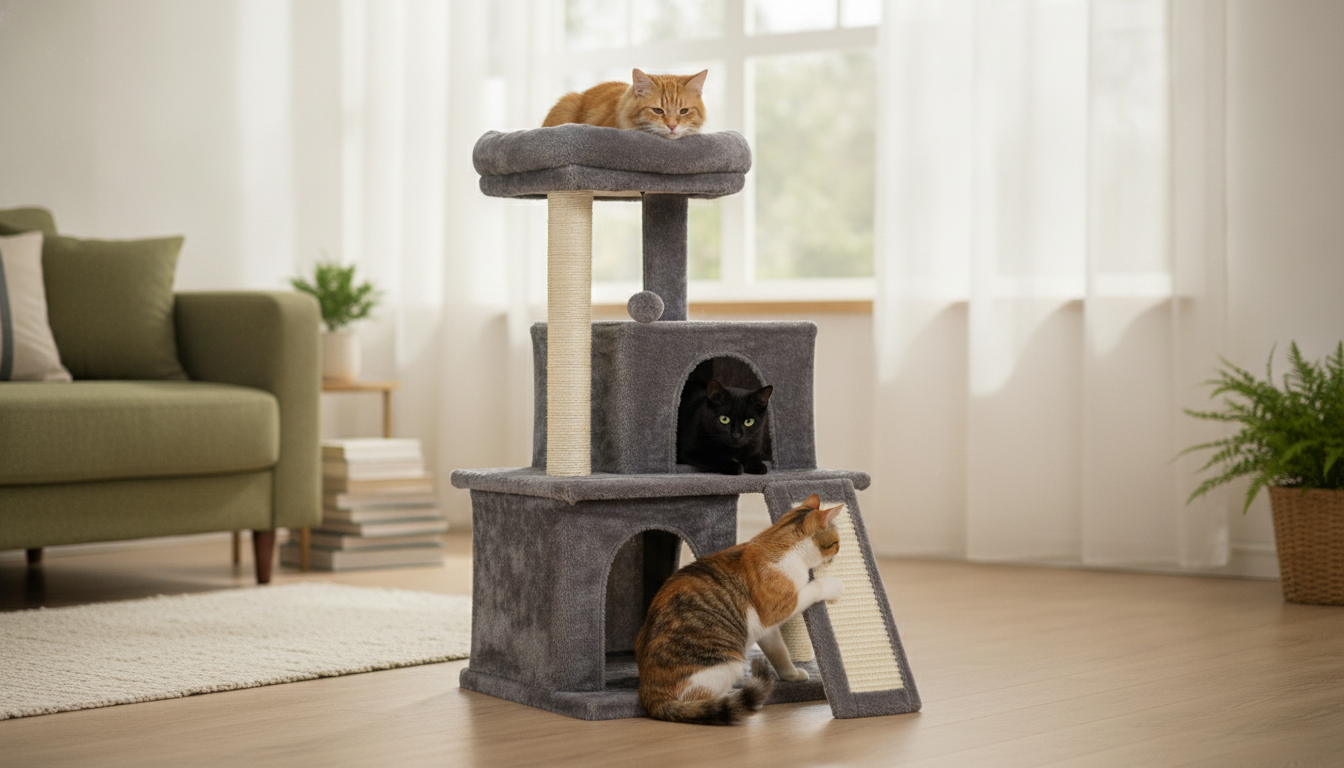
Multilevel Cat Tree with Double Condos, Spacious Perch & Scratching Post
A multi-level cat tree can turn a corner of the home into a climbing route, nap zone, and scratching station all in one. The best setups feel comfortable for everyday lounging, steady during energetic zoomies, and “obvious” enough that cats choose them over the couch. Below is a practical guide to the details that matter most—comfort, stability, scratching surfaces, and placement—so cats can perch, hide, and stretch-scratch while your furniture gets a break.
What Makes This Style of Cat Tree Work for Most Homes
For many households, the most-used cat furniture is the piece that supports multiple natural behaviors without taking over the room. This particular style—multi-tiered with two condos, a roomy perch, and a scratch post—tends to fit that sweet spot.
- Multiple levels create a simple up-and-down pathway for climbing, jumping, and “supervising” from a safe height.
- Two enclosed condos offer retreat spaces for shy cats and create separation options in shared homes.
- A spacious top perch encourages lounging and watchful rest, especially when positioned near a window or open sightline.
- An integrated scratching post gives cats an appropriate outlet for claw care and territory-marking, helping redirect scratching away from furniture.
For a deeper look at why scratching access matters, see guidance from International Cat Care.
Quick Feature Overview
If you’re choosing one piece to cover the basics—climb, hide, perch, and scratch—this configuration is a straightforward option.
- Best for: homes that want one footprint to handle most daily cat activities.
- Cats that often benefit: indoor cats, many multi-cat households (with thoughtful placement), and cats that love elevated resting spots.
- Common placement wins: next to a window, near a social area, or adjacent to an existing “cat route” like a sofa arm or sturdy shelf.
Feature-to-Benefit Snapshot
| Feature | Why it matters | What to check at home |
|---|---|---|
| Double condos | Creates private resting spaces and helps reduce conflicts | Place where cats can access both entrances without feeling cornered |
| Spacious perch | Supports comfortable lounging and a sense of security | Choose a location with a clear view (window or open room) |
| Scratching post | Encourages healthy scratching and protects furniture | Put near an area where scratching already happens |
| Multilevel platforms | Promotes exercise and vertical territory | Ensure enough clearance from walls/curtains for safe jumping |
Comfort and Cat-Friendly Design Details to Prioritize
“Looks cozy” isn’t always the same as “gets used daily.” Cats gravitate to stable surfaces, predictable access routes, and resting spots that match their mood in the moment.
- Condo comfort: enclosed spaces should feel inviting—neither too tight nor too exposed. If the interior feels a bit bare, a thin washable pad can make it a go-to nap zone without trapping heat.
- Perch usability: the top area tends to get the most attention when it’s easy to reach from the level below (no awkward leaps that make cats hesitate).
- Surface feel: cats typically prefer stable, non-slippery platforms. If your floors are slick and the base can slide, a grippy mat under the tree can improve confidence during takeoffs and landings.
- Scratch satisfaction: scratching posts work best when tall enough for a full stretch and positioned where the cat already wants to scratch. This is also where consistent redirection pays off.
General enrichment basics (like providing appropriate outlets for normal behaviors) are also covered by the ASPCA’s cat care resources.
Stability, Safety, and Placement
A cat tree can be plush and attractive, but if it wobbles, many cats will avoid it—or only use the lowest levels. Prioritize stability first, then “prime” the tree so it naturally becomes part of your cat’s routine.
If you’re working through persistent scratching or confidence issues, the Humane Society’s cat behavior resources can be a helpful starting point.
How to Introduce a New Cat Tree (So It Gets Used)
Care and Upkeep for Long-Term Use
Product Options Available Now
- Multilevel Cat Tree with Double Condos, Spacious Perch & Scratching Post ($48.51) — a single-piece setup designed to combine hiding, perching, and scratching in one footprint, especially useful for cats that alternate between social perching and private naps.
- Artificial Tall Tree with Pot ($60.51) — a simple way to “finish” a cat corner visually; placed near a cat tree, it can help define the space as a cozy nook while keeping maintenance low.
FAQ
Where should a cat tree be placed for best use?
Place it on a flat, steady surface, ideally against a wall for extra stability. Locations near a window or where your cat already relaxes tend to get the fastest adoption, as long as the area is clear of hazards like curtain cords.
How do you get a cat to use the scratching post instead of furniture?
Put the post right next to the spot your cat already scratches, then reward any investigation or scratching with treats or play. If your cat likes catnip, a small amount can help, and temporarily covering or blocking the furniture target can reduce backsliding.
Is a cat condo better than an open bed?
A condo often suits cats that prefer enclosed security or need a retreat in a busy home, while an open bed works well for cats that like visibility and easy access. Having both options on one tree supports different moods—hide when they want privacy, perch when they want to watch.









Leave a comment